How do you say Goodbye?

How do you say Goodbye?

Two weeks ago, during what I thought would be a routine telepsychiatry appointment, Monalisa told me something I wasn’t prepared to hear.

Our next appointment would be our last.

We were reviewing how the medications were doing. A recent increase in Effexor had helped resolve a brief resurgence of depressive symptoms that had begun to interfere with my quality of life. Because of the dose change, we had returned to meeting every couple of weeks.

We talked about life more broadly—how the boys were doing, how work was going, and how things felt surprisingly stable for now, even with a major move to Chicago looming a few months down the road.

Continue reading “How do you say Goodbye?”

McClain, Paramedics, Qualified Immunity, Other Thoughts

Many of you may have already read the verdicts rendered for Jeremy Cooper and Peter Cichuniec, two Aurora-area Firefighter/Paramedics who were involved in the care and transport of Elijah McClain in 2019 in Aurora, Colorado. The encounter between Mr. Mcclain, Aurora PD, and Aurora FD ultimately resulted in his untimely death. For those unfamiliar with the case, the brief summary is thus:

A suspicious person call resulted in a PD stop of Elijah, who was walking home from a convenience store with the merchandise he purchased. Several Aurora PD officers on-scene attempted to restrain Elijah, ultimately utilizing a carotid choke hold to subdue him to the ground. During this time, EMS was also summoned as he was suspected to be suffering from “excited delirium” – a diagnosis made by PD, not by EMS, as they had not yet arrived on-scene. When AFD arrived on-scene, according to body-cam footage, the FF/Medics were directed by PD to restrain Elijah with Ketamine because of his apparent excited state (it was later determined he was likely hypoxic from the carotid hold, and not because of an underlying drug- or psychosis-related delirium state) and the paramedics, without performing their own physical exam, checking any vital signs, or determining the appropriate course of action, seemed to follow directions from APD, who do not have medical control authority over AFD. The paramedics administered 500mg of Ketamine (likely an inappropriate dose and inappropriate medication to give in the first place), and then placed Elijah in a prone position on the stretcher for transport. No vital signs were assessed and he remained handcuffed and prone for enough of a period of time to cause apnea (stopped breathing) and went into respiratory arrest, ultimately going into cardiac arrest and dying while under EMS care and in APD custody.

Continue reading “McClain, Paramedics, Qualified Immunity, Other Thoughts”

My New “Worst Call Ever” Has Arrived

Ask any EMS or other public safety professional what stereotypical trope in conversation they hate the most, and they’ll probably tell you not to ask “What’s the worst thing you’ve ever seen on a call?” – and for good reason. We don’t like revisiting those calls. We don’t need to trudge them back up into memory for your own personal entertainment. We have our own ways of dealing with the feelings and memories surrounding those calls, and a lot of them are private, sensitive topics and are not for public discussion. Certainly not around the dinner table, or standing at the grill in the backyard over a couple of beers. Not only that, but you, as an outside observer, likely have no idea the amount of trauma you’re about to be subjected to by engaging in experiencing such a traumatic experience in whatever vivid detail we decide to come up with in response to your imposition. Asking a public safety professional to rehash their “worst call ever” is like asking a loved one “what’s your most painful memory and would you mind sharing that with me just for giggles?”

Continue reading “My New “Worst Call Ever” Has Arrived”

Lifesaver? Hardly.

This lifesaver pin was presented to me to celebrate my first CPR “Save” – when, early in my EMS career, I worked as part of a team of EMS professionals to apply CPR (Cardiopulmonary Resuscitation) to a Sudden Cardiac Arrest victim, and this resulted in the patient having their pulse restored long enough to be transported via ambulance to an ER for definitive care for their blocked coronary artery. The patient lived, was able to walk out of the hospital, and to the best of my knowledge, lived a long and happy life for a good number of years after that. I wear this pin with pride, celebrating this moment in my career when I worked as part of a team of professionals to truly save a life, to help literally bring somebody back from the dead, to give them a second chance at life. To make the biggest, greatest, possible difference in a human being’s world one could ever possibly hope to make.

Continue reading “Lifesaver? Hardly.”

The People Who Make Up My Life

My wife joined my life journey unexpectedly, and has remained a steadfast and constant source of compassion and comfort.

I’ve been thinking a lot lately about how people move in and out of my life. Quickly. Slowly. Suddenly and abruptly. Gradually or almost without noticing. The amount of time they spend in my life, in my physical presence seems completely unrelated to the amount of time they remain in my conscious and subconscious mind for days, weeks, and years after we part ways. Did they become a part of my life because I was born into a family they were already a key part of, as with my Gramma, and so I never knew a world without her as I grew up, forming every early memory and becoming the person I am today with so many of her fingerprints all over my way of thinking, of being, how I interact with people, how I think about the world around me? Or were they a coworker who became like a family member to me, a brother or sister, who I could trust with my life in a heartbeat, and who would trust me with theirs just the same? Were they a patient? Brought into my life by maybe the worst part of theirs, expecting me to solve their most dire problem at a moment’s notice, together for perhaps only minutes or an hour, and gone again just as fast.

Continue reading “The People Who Make Up My Life”

Connecting with a Drug Overdose Patient

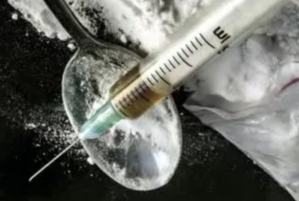
Freehold-Heroin-Possession-Offense (1)She’s only 20 years old*. 15 years younger than me. Laid out on the ground in front of the house. It’s 40 degrees outside at 1am here in Texas. Her boyfriend woke up and found her not breathing and did CPR on her while waiting for us to show up. The police showed up first and she woke up. They started their investigation before Fire and EMS even made it to the scene, and proudly declared to me that they had discovered heroin and drug paraphernalia inside the house. All around me are public safety employees shouting at this young woman, “what did you take?” and “what are you on?” and “whose drugs are inside the house?” Continue reading “Connecting with a Drug Overdose Patient”

Bringing New Life Into the World

storkI don’t often share much about my personal life through this blog, but I am elated to share with you, my readers, that my wife and I are expecting our first child, a boy, due in January 2018! Admittedly, this is a very happy, hectic, exciting time in our lives, and I can’t help but think back on some of the times that I had the opportunity to share in the beginning of a new life in my EMS career.

I’ve had the privilege of assisting with the delivery of 4 babies in my career. I know plenty of medics who go their entire careers without a single field delivery. I guess I’m just lucky? I do feel that it’s a privilege. Very few calls are so high-acuity, with the potential for SO many things to go wrong, as a childbirth. At the same time, very few calls can be SO thrilling and amazing and emotional when everything goes right and you end up with a healthy baby to hand over to Mom. Thanks to the miracles of modern medicine, doctors are much better at predicting due dates and monitoring pregnancies as they progress, so field deliveries have become much less common than they were in decades past. However, sometimes things catch you by surprise, sometimes mothers (for some reason) elect to forgo prenatal care, and sometimes it’s just chance that a mother winds up delivering a baby at home or in an ambulance. For the record, if I never have another field delivery in my career, I’d be OK with that. It’s a stressful, messy, high-acuity call, and having been a part of 4 of them, I can say that I truly do appreciate the miracle of life.

Continue reading “Bringing New Life Into the World”

How We Used to Die

An excellent piece I read a while ago and then lost the link before I had saved it. How do you handle elderly patients in cardiac arrest? Are these calls difficult for you? I often wonder if anyone has spoken about quality of life vs. quantity to the family members crying out for help for their loved one. Read this excellent blog post and let me know what you think in the comments section. –Dave

How We Used to Die (external link) 

Like my own Gramma

wp-image-58489901jpg.jpg
My  Gramma’s hand, held by my sister’s, a few days before Gramma passed away.

We  were dispatched for trouble breathing. It had been a busy night, back-to-back calls, all kinds of patients. The day had felt rather hurried and frantic. My partner and I were both a few PCRs behind. We arrived on scene at a single family home and a woman waiting out front for us. “It’s my mom…. something’s not right…” she trails off, obviously upset, fearing that we’re going to bear horrible news when we see her mother.
The house is old, with narrow hallways and tight corners. We leave the cot in the hallway leading to the back bedroom because it won’t make the tight turn. I carry my monitor and airway bag.

As I make the turn into the bedroom, my heart skips a beat. The frail, white-haired, quiet woman in bed could have been my Gramma’s twin. Continue reading “Like my own Gramma”