The Seat Doesn’t Remember You

The Seat Doesn’t Remember You

The call wasn’t anything major. Two-car MVC, minor entrapment, a couple door pops, patients removed, scooped out and moved into the waiting ambulances. We handled it without mutual aid from neighboring counties. One volunteer fire department assisted. City and County law enforcement on scene directing traffic.

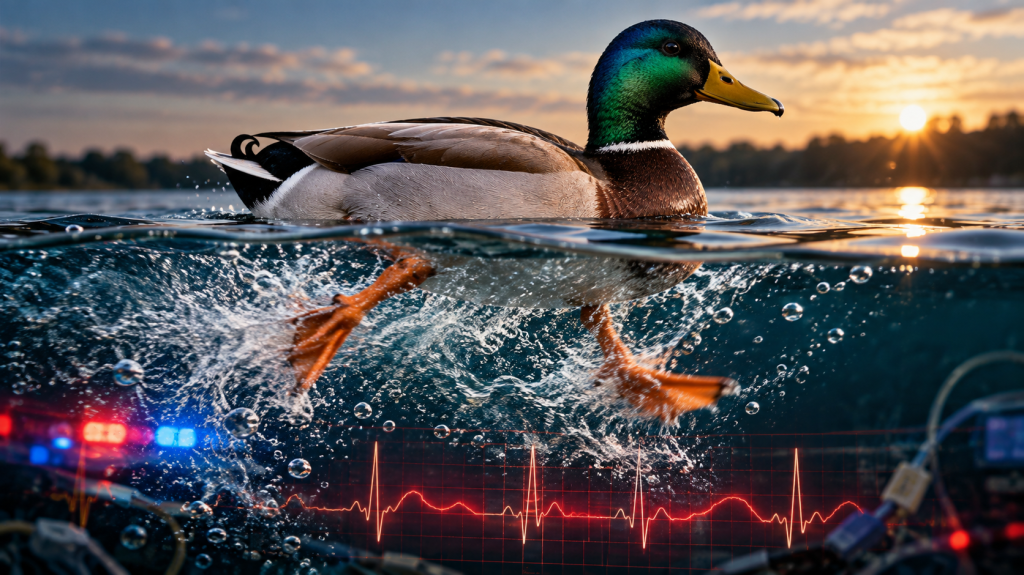
My role was pretty simple: head on a swivel, count patients, count crews, make sure nobody steps outside the traffic cones, make sure nobody drives inside them, ensure all patients get triaged and transported or get a signed refusal before we leave. Communicate with dispatch. Remain calm. Like a duck on the water—calm on the surface, paddling like mad underneath.

It took maybe 35 or 45 minutes to wrap up. After everyone handed off patients at our little local ER, the crews were in the bay wiping down equipment, syncing monitors, wrapping cables, talking about the call… or about dinner, or their kids, or whatever else was going on in their lives.

We aren’t a big department. Everyone knows everyone. I’ve met my guys’ families. They aren’t just names on a schedule. They have faces, lives, people waiting for them at home—and that all sits in the back of my mind every time I’m watching out for them on a scene.

It wasn’t a big call. We didn’t do anything flashy. But I’m still proud of my guys. They showed up ready to work. They communicated. They shared the load. They listened, moved quickly, treated people right, and most importantly—we all went home safe.

I stood there under the fluorescent lights of the ambulance bay, watching them wrap up, and felt that quiet kind of pride you don’t really talk about. Not because of the call—but because of the team. I don’t worry when I give them a task. I know it’ll get done. I know they care. I know they’ll take care of whoever gets put in front of them. I just try not to screw it up while I get to be a part of it.

As each crew finished up, they called back in service and pulled out of the bay, heading back to their districts. One by one, the trucks rolled out into the night.

And standing there, watching them leave, it hit me.

Someday soon, there will be someone else standing in this same spot, wearing the same white shirt uniform, watching these same crews load up and drive away.

It won’t be me.

I am replaceable.

Someone else will take the seat. Not to replace me—but to keep it going. The tones will still drop. The calls will keep coming. The phone will ring. And somebody has to answer it.

So if I’m just a replaceable part… did I even matter? Will I even be remembered? That’s not the point. I tried to make things better while I was here. Take care of my people. Set a standard. Remove the nonsense that gets in the way so they could focus on doing the job. Mostly, I just tried not to screw it up. Somebody else is going to wear this badge. Somebody else is going to be KC904. They’re going to find out how lucky they are.

There’s a reason we say “B SHIFT LEADS THE WAY.” It’s not loud. It’s not flashy. It’s just a quiet standard that gets held, every day, by people who care about doing this job right.

I’m grateful for the time I got here. And I know my guys will be just fine without me.

That’s kind of the point.

If you do this job right, you don’t make yourself irreplaceable.

You make sure the job keeps running when you’re gone.

How do you say Goodbye?

How do you say Goodbye?

Two weeks ago, during what I thought would be a routine telepsychiatry appointment, Monalisa told me something I wasn’t prepared to hear.

Our next appointment would be our last.

We were reviewing how the medications were doing. A recent increase in Effexor had helped resolve a brief resurgence of depressive symptoms that had begun to interfere with my quality of life. Because of the dose change, we had returned to meeting every couple of weeks.

We talked about life more broadly—how the boys were doing, how work was going, and how things felt surprisingly stable for now, even with a major move to Chicago looming a few months down the road.

Continue reading “How do you say Goodbye?”

The Chair

The Chair

On Location

My first real job out of college wasn’t in medicine, or anywhere near an ambulance. It was in lighting — the kind that makes concerts glow, trade shows sparkle, and corporate galas look like the Grammys. The company was called On Location Lighting Systems, or OLLS, based out of northern Kentucky just south of Cincinnati.

That place was equal parts magic and madness. The shop always smelled like sawdust, gaff tape, and dust from road cases that had been halfway around the country. I was mostly broke — just out of school, living mostly on PB&Js, takeout food, and overtime — but for the first time, I felt like I was part of something creative. I was the shop manager, which meant I handled all the rental gear going out and coming back in, did minor repairs, kept the chaos somewhat organized, and still found myself out on shows and short tours whenever they needed an extra pair of hands.

Continue reading “The Chair”

A Mental Health Odyssey – Still Here

A Mental Health Odyssey – Still Here

Gratitude and Light in the Dark

When I wrote A Mental Health Odyssey, I honestly didn’t know what would happen. Hitting “publish” felt a little like standing naked in the middle of traffic — raw, exposed, and bracing for impact. I wasn’t sure if anyone would read it. I wasn’t sure if anyone would care. And if they did care, I half-expected whispers, judgment, or polite distance.

What I got instead was the opposite. Messages from colleagues in EMS who admitted they’d been in the same hole. Supervisors who could have looked the other way, but didn’t. Members of Marina’s congregation who reached out with warmth I didn’t see coming. Even people I barely knew told me they saw themselves in my words. It felt like people started handing me candles in the dark, one by one, until the room didn’t look so terrifying anymore.

Continue reading “A Mental Health Odyssey – Still Here”

A Mental Health Odyssey

A Mental Health Odyssey

I’ve written before about my struggles with mental health. I’m diagnosed with major depressive disorder, generalized anxiety disorder, and social phobia. Many are surprised to learn this about me in contrast with my chosen profession of EMS, where I am routinely confronted with high-stress situations and interfacing with the public and unknown groups of people on a regular basis. At baseline, I’m a pretty easy-going guy. Through a combination of a lifetime of therapy and the right medications, I am able to live a happy life, and function well at work, providing professional, courteous care to my patients, and working well with my peers and supervisors. Over the past year and a half or so, I lived and worked through some very difficult changes in my mental health. They affected me, my family, my work life, my home life, everything around me changed as a result. I am writing this (very long) blog post to share my journey into, through, and out of one of the worst times of my life.

Please be forewarned that I share very personal information and thought processes, some medical information, and thoughts pertaining to suicidality/self-harm in this post.

Continue reading “A Mental Health Odyssey”

McClain, Paramedics, Qualified Immunity, Other Thoughts

Many of you may have already read the verdicts rendered for Jeremy Cooper and Peter Cichuniec, two Aurora-area Firefighter/Paramedics who were involved in the care and transport of Elijah McClain in 2019 in Aurora, Colorado. The encounter between Mr. Mcclain, Aurora PD, and Aurora FD ultimately resulted in his untimely death. For those unfamiliar with the case, the brief summary is thus:

A suspicious person call resulted in a PD stop of Elijah, who was walking home from a convenience store with the merchandise he purchased. Several Aurora PD officers on-scene attempted to restrain Elijah, ultimately utilizing a carotid choke hold to subdue him to the ground. During this time, EMS was also summoned as he was suspected to be suffering from “excited delirium” – a diagnosis made by PD, not by EMS, as they had not yet arrived on-scene. When AFD arrived on-scene, according to body-cam footage, the FF/Medics were directed by PD to restrain Elijah with Ketamine because of his apparent excited state (it was later determined he was likely hypoxic from the carotid hold, and not because of an underlying drug- or psychosis-related delirium state) and the paramedics, without performing their own physical exam, checking any vital signs, or determining the appropriate course of action, seemed to follow directions from APD, who do not have medical control authority over AFD. The paramedics administered 500mg of Ketamine (likely an inappropriate dose and inappropriate medication to give in the first place), and then placed Elijah in a prone position on the stretcher for transport. No vital signs were assessed and he remained handcuffed and prone for enough of a period of time to cause apnea (stopped breathing) and went into respiratory arrest, ultimately going into cardiac arrest and dying while under EMS care and in APD custody.

Continue reading “McClain, Paramedics, Qualified Immunity, Other Thoughts”

Out with the old…

Out with the old, and in with the new, they say, right? It’s a small thing, but the red penlight on the right has been with me for the better part of 15 years. I think it maybe was a gift when I graduated from paramedic school. It’s been in my sleeve pocket or shirt pocket on literallyevery single EMS call I’ve gone on since then, and has assisted me with assessing thousands of patients. It recently started malfunctioning, and despite having survived several trips through the wash, untold rolls under the stretcher wheels, drops down stairs, and being forgotten in ambulance footwells, patient homes, and on sidewalks, somehow it always managed to find its way back to me. Tonight it finally gave up the ghost, and I replaced it with a new blue one of the same model, a Streamlight Stylus Pro. (why in the world would I look for a new model after such good service from the original?)

I know many of my colleagues trust the disposable penlights handed out by the service they work for, but there’s something meaningful and tangible to me of having my own diagnostic tools available and at the ready. I think my wife rolled her eyes a little when I expressed some sadness at the idea of moving on from ol trusty rusty here, and I get it. It is, after all, just a thing, an inanimate object that I have assigned meaning to over the years. It has no feelings or thoughts and won’t know that I have replaced it with a cleaner, shinier, better-working version of itself. And yet…. there’s a tiny part of me that will miss ol’ red, it won’t be the same penlight I’ve had for all these years in my pocket. There’s something to be said for consistency, and I find great comfort in it. Anyway, can’t help patients with a broken penlight, so I must move forward and start another 15 year adventure with blue here, and see what kind of trouble we can get ourselves into!

Thanks for reading my ramblings. If you got this far… are there any tools or gadgets you hold on to despite their obvious replace-ability?

My New “Worst Call Ever” Has Arrived

Ask any EMS or other public safety professional what stereotypical trope in conversation they hate the most, and they’ll probably tell you not to ask “What’s the worst thing you’ve ever seen on a call?” – and for good reason. We don’t like revisiting those calls. We don’t need to trudge them back up into memory for your own personal entertainment. We have our own ways of dealing with the feelings and memories surrounding those calls, and a lot of them are private, sensitive topics and are not for public discussion. Certainly not around the dinner table, or standing at the grill in the backyard over a couple of beers. Not only that, but you, as an outside observer, likely have no idea the amount of trauma you’re about to be subjected to by engaging in experiencing such a traumatic experience in whatever vivid detail we decide to come up with in response to your imposition. Asking a public safety professional to rehash their “worst call ever” is like asking a loved one “what’s your most painful memory and would you mind sharing that with me just for giggles?”

Continue reading “My New “Worst Call Ever” Has Arrived”

Revisiting Mental Health…. Again…. and Again…

I wrote about the Code Green Campaign back in 2016 in my post about calling a code on our mental health. I was talking about how some of my “ghosts” haunt me, revisit me, remind me of some of the worst calls I’ve ever been on. It happens to me frequently. At night. During the day. When my mind wanders. When I run into an old partner. When I run the same type of call. When I’m training a new hire and they ask a question that reminds me of a patient with the same type of symptoms. I guess since I’ve been “doing this” for 15+ years, I’ve run enough calls that I’ve got more than a few bad memories stacked up inside my head, and some of them bubble up to the surface occasionally. Sometimes I can just shake it off. Sometimes they stick around, and I sit with it for a while and think about how the call went. How it made me feel then, and how it makes me feel now. Sometimes I think about what lessons I still carry with me as a result of the call, because I try to never let a “bad” call be in vain. A very dear mentor friend of mine told me that every death in the field should be a gift in some way to a field provider, that we should still be able to learn from it, and grow stronger as providers and be able to better care for patients and their family members as a result of having gone on that call, even if we weren’t able to have a positive outcome for that particular patient. I also write things down in journals, so I can look back and reflect on them. I talk to friends and coworkers. I talk to my family, sometimes more than they would like, I think. Probably most importantly, I talk to a therapist. Not as often as I should, but I have built a trusting relationship with a clinically trained therapist who specializes in working with public safety employees, and I know that I can reach out to her when needed, and that’s a valuable tool in my mental health toolbox. So why am I revisiting this topic again, today?

Continue reading “Revisiting Mental Health…. Again…. and Again…”

Lifesaver? Hardly.

This lifesaver pin was presented to me to celebrate my first CPR “Save” – when, early in my EMS career, I worked as part of a team of EMS professionals to apply CPR (Cardiopulmonary Resuscitation) to a Sudden Cardiac Arrest victim, and this resulted in the patient having their pulse restored long enough to be transported via ambulance to an ER for definitive care for their blocked coronary artery. The patient lived, was able to walk out of the hospital, and to the best of my knowledge, lived a long and happy life for a good number of years after that. I wear this pin with pride, celebrating this moment in my career when I worked as part of a team of professionals to truly save a life, to help literally bring somebody back from the dead, to give them a second chance at life. To make the biggest, greatest, possible difference in a human being’s world one could ever possibly hope to make.

Continue reading “Lifesaver? Hardly.”