

On Location
My first real job out of college wasn’t in medicine, or anywhere near an ambulance. It was in lighting — the kind that makes concerts glow, trade shows sparkle, and corporate galas look like the Grammys. The company was called On Location Lighting Systems, or OLLS, based out of northern Kentucky just south of Cincinnati.
That place was equal parts magic and madness. The shop always smelled like sawdust, gaff tape, and dust from road cases that had been halfway around the country. I was mostly broke — just out of school, living mostly on PB&Js, takeout food, and overtime — but for the first time, I felt like I was part of something creative. I was the shop manager, which meant I handled all the rental gear going out and coming back in, did minor repairs, kept the chaos somewhat organized, and still found myself out on shows and short tours whenever they needed an extra pair of hands.
The hours were brutal — ninety, sometimes a hundred and twenty a week — but that’s what the job demanded. Load-ins, focus calls, load-outs, and overnight setups in convention halls that echoed with forklifts and feedback checks. I’d crash for an hour on a flight case, wake up covered in dust, grab a stale donut, and go right back to it.

Jim, the owner, was the kind of guy who didn’t need caffeine to light up a room. Animated, intense, unpredictable, but brilliant — he could make you feel like you were part of something bigger than just cables and lights. Amy, his right hand, was the calm in all that chaos. She had this grounded, competent presence that made everything seem possible. She was the one who smoothed things over when Jim’s energy outpaced his diplomacy, the one who kept the train on the tracks.
Tommy, my first college friend and one of my closest brothers-in-arms, worked there too. Having him around made it bearable — even fun. We’d be rigging S4Pars at two in the morning, swapping stories about college theatre gigs, trying to one-up each other with bad road jokes while the rest of the crew slogged through the night.
That’s where I learned what real camaraderie felt like — not the kind from shared hobbies or surface-level friendship, but the kind forged from exhaustion and mutual trust. We were making art, sure — but mostly, we were just trying to survive together and laughing our way through it.
Dinner on the West Side
My friendships grew with the people I worked with. I was, after all, spending most of my waking hours with them anyway. We worked together, ate together, toured together, traveled together.
After a short time, Amy and her husband Rob invited me over to their house for dinner after work. They knew I was single and on my own, mostly eating cheap takeout when I went home after long days in the shop. Their house was wonderful — a comfortable home on the west side of Cincinnati, chaotic and loud and friendly and warm, just like I remembered my home in Pittsburgh.
Amy introduced me to her kids. We had a great dinner, shared a few beers, and sat in the living room, where seating was limited. Rob had just gotten a new recliner, and the old one — a black leather rocker with a matching ottoman — was sitting in the corner. I grabbed it for myself, and we watched some of whatever game was on.
Before the night was over, Rob — who was also a professor of technical theater at a local college — asked me about my apartment. I remember being embarrassed to admit my lack of furniture, but without a moment’s hesitation, Rob and Amy offered me the very chair I was sitting on. They insisted.
At the end of the night, Rob helped me carry it down the stairs from their house, and we strapped it into the bed of my old red pickup truck. I remember calling my mom on the way home, incredulous that not only had one of my bosses invited me over for dinner with her family, but they had just gifted me this incredible piece of furniture for my new apartment.
The First Home
I got home late that night, the chair still warm from their living room. My apartment was quiet, dimly lit by the little lamp on the corner of my desk. I remember standing in the parking lot for a minute, staring up at those three flights of stairs, wondering how the hell I was going to get this thing inside by myself. But I did — one awkward, sweaty trip at a time.
When I finally got it into my living room, I just stood there for a second, catching my breath. It wasn’t fancy, but it felt real. Like my little apartment suddenly had a heartbeat. I pushed it into place in front of the TV, collapsed into it, and just sat there for a while. The leather was cool and worn in that perfect way — soft where it should be, creaky where it had stories to tell.
That night, I might’ve fallen asleep in it. I can’t remember if I even made it to bed. All I know is that for the first time since moving out on my own, I didn’t feel like some broke kid playing at being an adult. I felt settled. Like I belonged somewhere.
The Downfall
For a while, everything felt like it was finally working. I had a job I loved, friends who felt like family, and this tiny apartment that finally felt like home. I was proud of what I was building.
And then I met Emily.
She came into my life like poison disguised as perfume. At first, she was charming — magnetic, even. She made me feel like I was the only person in the room, like I was seen and understood for the first time. When you’re young, overworked, and starved for calm, you don’t realize how dangerous that kind of attention can be.
But calm was never what she brought. What she brought was control — slowly, quietly, under the pretense of love. One by one, she dismantled the parts of my life that didn’t orbit around her. My friends became “bad influences.” My coworkers were “using me.” My job was “too demanding,” the same job that had given me purpose.
She isolated me from everyone who actually cared about me — Amy, Jim, Tommy, the crew — until it was just her voice left. And by then, I believed her.
The person I was — the one who laughed through overnight setups, who found joy in the chaos of OLLS, who could count on a shop full of people to have his back — disappeared.
By the time I realized what had happened, it was too late. I’d quit my job, alienated my friends, and convinced myself that burning it all down was a kind of fresh start. It wasn’t. It was just ruin.
The chair stayed with me through all of it — quietly, patiently, like it was waiting for the version of me that Amy and Rob once knew to come back.
Rebuilding
Predictably, a toxic relationship like that didn’t last. Anyone who demands that you abandon your friends, your work, change your life, change who you are as a person — they’re never meant to last.
The chair stayed with me, though. A silent reminder of an important friendship lost. A bridge burned. A part of me torn away, waiting to be found again someday.
Having left On Location, I parlayed my volunteer fire and EMS certifications into a job with a private transfer service in Kentucky. It wasn’t much, but the hours were decent and the pay was about the same as what I’d made at OLLS. I bounced around between a few companies for a while, trying to find my footing again.
Eventually, I went back to school and earned my paramedic patch — the hardest thing I’ve ever done in my life, even to this day. I would never want to repeat that experience, but I’m proud of having survived it.
Emily, of course, couldn’t see the light at the end of the tunnel. She complained nonstop about the time I spent studying, practicing, doing clinicals and ride times. But you can bet she was right there beside me at graduation, smiling for the photos and soaking up the credit.
After another year or so, it all blew up. Emily wasn’t satisfied with my right-leaning political ideology or my slightly blue-collar mentality. My very manual labor job didn’t fit with her high-society plans.
I have other thoughts about her, and about why it all ended — but those… are for another post. Another time.
Becoming Myself Again
I found myself with free time again. Time to hang out with friends. I reconnected with Tommy, Milena, Chris, and Melanie. I slept better. I got back into therapy. I got on antidepressants.
After a while, I even started dating again. I felt human again. I started to feel like myself again — like I could trust people, maybe even the world, again.
Still, I carried the weight of the bridges I’d burned at On Location — the friends I’d lost. I was jealous that Tommy was still in touch with Jim and Amy, and that they wouldn’t talk to me. But honestly, who could blame them?
Three First Dates
It was around that time that I met Marina on JDate. She was in seminary, studying to become a rabbi, and looking to meet someone local to Cincinnati who could introduce her to some fun new restaurants, bars, and places to hang out.

I was looking for… what? I’m still not sure. Happiness, maybe. Something short-term? Long-term? I didn’t put a name on it. I just knew, based on past experience, what I wasn’t looking for.
We hit it off pretty much instantly. In fact, we still love to tell the story of our “three first dates,” because we kept deciding to extend our first day together. We met for coffee in the afternoon, then agreed to meet up again later for dinner, and after closing down the sushi place, we went back to her apartment to watch Anchorman.
Moving In Together
After only about a year together — and with some enthusiastic approval from our friends and family — Marina and I decided to move in together. I was happy to bring along my favorite piece of furniture: the old black recliner Rob and Amy had gifted me years earlier.
Unbeknownst to Marina, my plan was to propose to her as a “move-in” gift once we finished unloading the truck.

(She said yes, by the way — along with a few colorful expletives.)
Fort Mitchell
Our new home together in Fort Mitchell, Kentucky was a wonderfully warm and welcoming two-bedroom apartment. We hosted friends, family, dinners, parties — we got a lot of miles out of that little space.
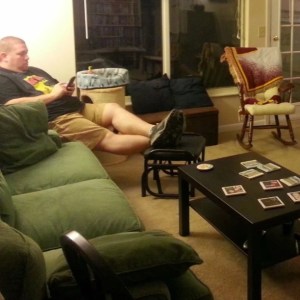
Through all of it, the black leather recliner sat comfortably in the corner of the living room, waiting for an afternoon read, a TV show, or a stolen nap. It was more than just a seat by then — it was a familiar anchor in a new chapter.
Heading South
When Marina was ordained by HUC, we found a new home in San Antonio, Texas. It was time to pack everything up and move clear across the country for her new job — her first job as a rabbi.
The chair, of course, came with us to the new house. Along with it came the memories of the friends who’d given it to me, the places it had been, the people who had sat in it, and the comfort it had offered me through so many different seasons of life.
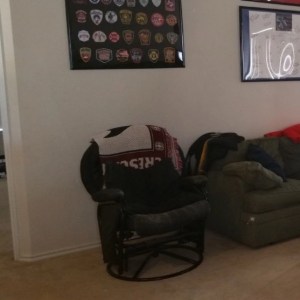
In our new home in Texas, we suddenly faced a problem we’d never had before — too much space. The chair found its place upstairs in the game room, a quiet corner away from the bustle of the main part of the house. It fit there perfectly, like it had just been waiting for the next chapter.
The Nursery
After three years in that first house, we decided to build our own home. It was definitely a learning process — one I’d do again, but next time armed with some hard-won knowledge about what to look out for, what to ask for, and what contingencies to plan. The timeline stretched out so much that we ended up moving in just a month before our first son, Trevor, was born.
Marina was under strict orders to supervise the moving of boxes and not to lift a finger. Naturally, the chair went with us — finding a new home in the nursery, ready for rocking, cuddling, and many, many late nights.
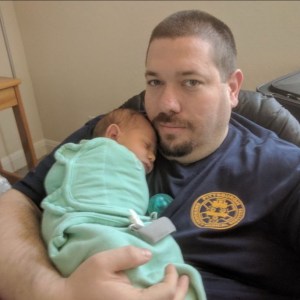
Trevor arrived and spent some time in the NICU because of breathing issues, but after about a week we brought him home. Being a paramedic prepared me for exactly none of being a parent like I thought it would. I was terrified all the time. But holding my tiny boy on that chair in the quiet of the night, or in those early mornings when the rest of the house was still, those are some of my most sacred early memories.
The Next Generation
As Trevor got older, we weren’t rocking him in the chair anymore, but I still sat in it next to his bed, reading him stories and eventually teaching him how to read.
A few years later, we celebrated the arrival of our second son, Joshua. Trevor moved into his “big boy room,” and Joshua inherited the nursery. More sleepless nights spent in that chair — this time with Josh. Marina nursed him there just as she had with Trevor.
By then, the chair had become as much a part of the nursery as the changing table or the little projector light that cast soft stars across the ceiling at night.
The chair stayed in that room, even as it transformed from nursery to “big boy room” for Josh. The crib was taken apart and put into storage. The changing table became a dresser. The shelves that once held stacks of diapers and wipes now overflow with books.
There are still some constants, though. The star projector still turns on every night. And the recliner still sat at the foot of the bed, where I sat reading to Josh.
He’s about to turn five now and just starting to show interest in learning to read. He’s sounding out words, starting to recognize them on sight. Sitting there in that same chair — the one filled with decades of memory and quiet history — I’d watch him figure out sounds, follow along with me, and feel this overwhelming pride in my little man.
And in those moments, I often thought about where that chair came from, more than twenty years ago, and everywhere it’s been in the meantime.
Until This Week
I was sitting in the chair reading to Josh when I heard a metallic crack. The chair tilted to one side. It wouldn’t glide correctly anymore. A weld had broken where one of the bolts from the frame connected. There was no way to fix it.
I was stunned. I didn’t know what to say. Without being overly dramatic, it felt like I had witnessed a death. This chair — a symbol of friendships gone by, jobs left behind, apartments and houses moved away from, colleagues out of touch, newborns turned into toddlers turned into children — was suddenly, irreversibly broken.
That one sharp metallic sound ended twenty years of quiet service.
My mind went right back to that night at Amy and Rob’s, carrying the chair up to my apartment as a twenty-something, thinking I was a grown-up back then. Thinking I knew what life meant. What was important.
I thought about Jim offering me the full-time job at OLLS right out of college. He didn’t have to. He trusted me. He gave me a chance, gave me honest work and a paycheck before I’d proven I deserved either. He welcomed me into his friendship — into his family. Amy did the same.
And I paid them back with disdain and pettiness because my girlfriend told me to.
I felt ashamed. Guilty. Longing for reconnection — for repair.
I looked at my boys. At Marina. At all that I have now. And I thought about the path my life has taken in the two decades since I left OLLS. I wouldn’t give up what I have now — my one true love in Marina, my wife of almost twelve years, and our two incredible boys. But the path that got me here?
If I could do it again and keep some of those friendships along the way — not lose touch with the people who helped lay this path before me — I would.
Reconnection
I reached out to Amy. I wrote to her and told her about how I’d kept the chair all this time, how much it had meant to me, and how deeply I regret destroying our friendship. How stupid and petty I’d been as a young man.
I’d reached out once before, about ten or twelve years ago, but never heard back. This time, she wrote me back.
She remembered the chair fondly. She said she was happy for me — for my success as a paramedic, and for my beautiful family. She and Rob have moved on, too. OLLS shut down a few years after I left. They live far away now, but they’re happy.
Amy was kind. Warm. Gracious. I certainly didn’t deserve all that kindness. But she was also firm and clear in her message of closure — and I probably do deserve that.
You don’t get to go around shitting on people, cutting them out of your life, and then just ask them back in two decades later and hope for the best. It’s a shitty lesson to have to learn.
What I’ll Teach My Boys
So what do I want to take from all this?
Besides saying farewell to a chair that’s carried me through half my life — from bachelorhood to marriage to fatherhood — I want to remember what it represents. Every place I’ve lived, every phase I’ve grown through, every person who’s helped me along the way.
I want to teach my boys that friendships take work — and should never be taken for granted.
I want to teach them that saying “I miss you,” even when it feels awkward, can save a friendship or a relationship. I want them to hold onto their friends — from school, from camp, from temple, from work, from anywhere they find meaning and happiness in their lives — if those friendships matter to them.
I don’t want them to live with that quiet, persistent sense of loss — of always wondering what happened to the people who once meant something and then just faded away.
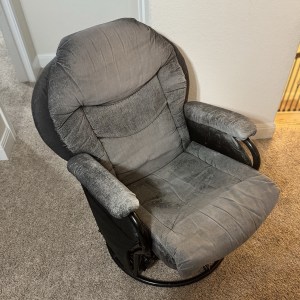
I might have to say goodbye to the most comfortable chair I’ve ever owned, but the journey of life it took with me was incredible — and certainly not one I could have predicted twenty years ago.

