Gratitude and Light in the Dark
When I wrote A Mental Health Odyssey, I honestly didn’t know what would happen. Hitting “publish” felt a little like standing naked in the middle of traffic — raw, exposed, and bracing for impact. I wasn’t sure if anyone would read it. I wasn’t sure if anyone would care. And if they did care, I half-expected whispers, judgment, or polite distance.
What I got instead was the opposite. Messages from colleagues in EMS who admitted they’d been in the same hole. Supervisors who could have looked the other way, but didn’t. Members of Marina’s congregation who reached out with warmth I didn’t see coming. Even people I barely knew told me they saw themselves in my words. It felt like people started handing me candles in the dark, one by one, until the room didn’t look so terrifying anymore.
It’s one thing to survive a mental health crisis. It’s another to rip the curtain back and let people see it, scars and all — and then have them meet you with compassion instead of recoil. That part floored me. It was more than comforting. It was affirming. It reminded me that dragging pain into the open isn’t weakness. Sometimes it’s exactly what someone else is waiting for to do the same.
The Ripple Effect of Vulnerability
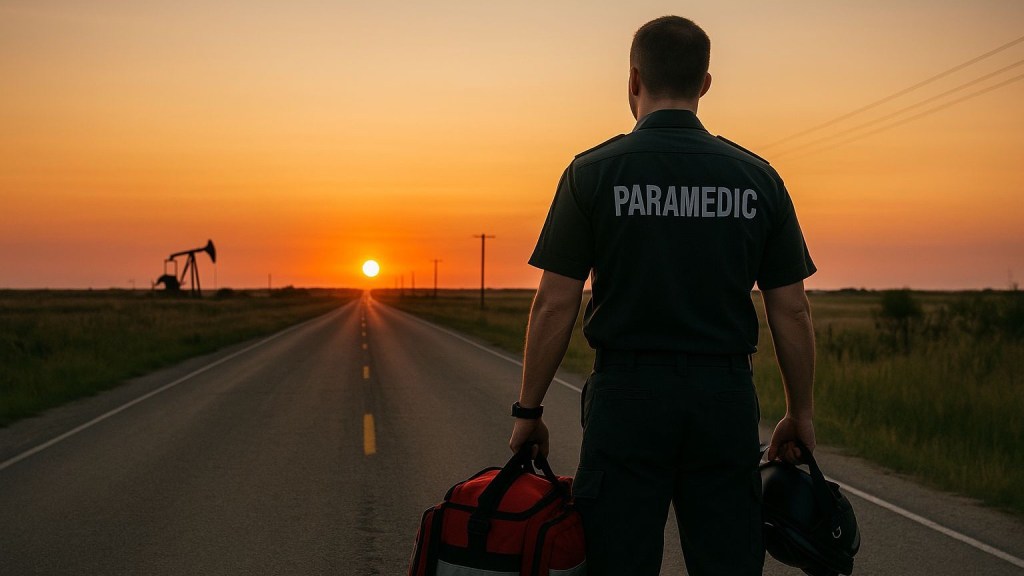
Coming back to work after my time off was terrifying. I was scared I wouldn’t be okay, scared I wouldn’t be able to do the job, scared I’d let everyone down. Most of all, I was scared of failing at the position I’d worked so hard to earn — that my depression would erase years of effort, and I’d lose the trust of my chiefs.
So I started small. I sat down with my crew, one by one, and told them the truth. Not the polished, “I’m fine now” version, but the raw story: why I’d been off, what it felt like to walk back into the station not knowing if I could handle it, and how shaky it all felt at first. Those conversations weren’t easy. These are the guys who count on me in chaos, who look to me for steadiness. Part of me worried they’d see me differently, like I wasn’t the same captain they needed. But they didn’t treat me like I was broken — they treated me like I was human.
When I finally felt strong enough to write A Mental Health Odyssey, they were the first ones I shared it with. Phones out at the station, scrolling through my words, looking up at me with that mix of seriousness and understanding that told me they got it. And then they said the thing I didn’t expect: they could tell. They told me they’d noticed the change — that I was carrying myself differently, showing up more grounded, more present.
And then there were my chiefs. The people I’d been most afraid of letting down. From the start, they supported me — through the FMLA leave, through the uncertainty of if or when I’d come back, through those shaky first shifts. And when I finally hit my stride again, they didn’t just move on like nothing had happened. They noticed. They acknowledged the work it took to get back. They told me they could see I was better.
That meant the world to me. In EMS, it’s easy to feel replaceable — like if you stumble, someone else will take your spot and you’ll just become a story whispered in the bay. But having my chiefs stand behind me instead of over me, having my crew look me in the eye and say they saw the difference, gave me something I didn’t know I needed: proof. Proof that the work I was doing on myself wasn’t invisible. Proof that I hadn’t failed. Proof that I still belonged.
That kind of feedback is fuel. It kept me going. It still does.
A Sacred Story Shared

The High Holy Days always carry more gravity — the prayers, the music, the sermons. This year, I knew Marina was going to share pieces of our journey in her sermon, because she asked my permission first. It wasn’t only about my crisis, but it was a big part of the larger message she wanted to bring. Her focus was on anxiety — how our tradition holds both sides of it at once. She drew from Proverbs 28:14, which teaches, “Happy is the one who is anxious always.” She explained how anxiety can be destructive when it drags us backward into guilt and regret over the past, but also productive when it pushes us to prepare, to care, and to stay alert for the future. For the first time in a long time, I heard anxiety reframed as something not only survivable, but meaningful.
Of course, I had read her draft multiple times. I’d heard Marina rehearse it more than once in our living room. But sitting there in the second row, listening to her deliver it to a packed sanctuary — it hit differently. The words weren’t bouncing around our house anymore; they were filling the air of a holy space. I watched people laugh at her puns, I heard the sharp intake of breath when she named uncomfortable truths. And I felt, in real time, what it was like to have our private pain transformed into something communal, something sacred.
What happened after was even more powerful. Congregants came up afterward, some with tears in their eyes, thanking her for putting words to what they’d been feeling. People I’d known for years but had never spoken to beyond a quick hallway greeting admitted that they, too, were struggling — or caring for someone who was. A wall came down that day. The congregation embraced Marina, they embraced me, and they reminded us that community is bigger than silence.
I don’t think most of them knew how severe my depression had been. Some probably didn’t know at all. But hearing their responses made it clear: sharing the truth cracked something open. And in that crack, light got in.
Therapy: From Survival to Growth

My weekly sessions with Michelle have been the backbone of this whole journey. In the beginning, they were about survival — EMDR sessions to pull me out of the grip of memories, grounding exercises to quiet the chaos in my head, raw conversations where I spilled the ugliest thoughts I’d ever had. Therapy back then was triage.
Now it feels different. EMDR is still in the toolbox, and we use it when something sharp and disturbing comes up — a call that sticks too hard, a thought that loops in my head. But most weeks, it’s talk therapy. It’s me sitting across from Michelle, not as a crisis case, but as a person figuring out where I’m at and where I want to go.
In one of those sessions not long ago, I told her something I’d been holding for a while: that if it weren’t for our pre-existing relationship — the trust we’d built over years — and if it weren’t for my partnership with Marina, I would have killed myself during the lowest point of this crisis. That would have been the end of Dave. Saying it out loud felt like dropping a heavy stone on the table between us.
Michelle didn’t just hold the space. She helped me untangle the next layer — that I’m not only sad and upset about the time I lost, the grief and guilt I carry for the illness I suffered, and the pain I caused. She helped me see that I am stronger now for having lived through it. That I came out of it with tools to reframe what I can now recognize as smaller worries.
I shared these thoughts with Marina, too. She agrees with my thinking: there’s no way to accept a horrible thing like what I went through as a “positive,” or to be thankful for it in any way. But I can still acknowledge that I am better now, and that I have a clearer outlook on life because of the work I’ve done with Michelle.
Therapy now isn’t just about keeping me alive. It’s about helping me live — to be more patient with my kids, more present with Marina, more grounded at work. It’s about building a life that doesn’t just avoid the dark, but actually seeks the light.
Life on the Other Side

Living through the darkest chapter of my life didn’t magically make everything better, but it changed the way I move through the world. It’s like having survived a house fire: even when the flames are gone, you still smell the smoke. That memory shapes how you live in the house you rebuild.
The weight of what almost happened hasn’t gone away. It rides with me every day, but not as a threat anymore — more like a compass. It reminds me of how fragile things can be, and how strong the threads are that hold me here. Because of that, I move a little slower. I breathe more. I pause. I notice.
With the boys, it shows up as patience I didn’t always have before. When Josh melts down or Trevor drifts off into his own world, I can stop myself from snapping and remember what matters. With Marina, it shows up as presence — choosing to sit with her, to really hear her, to find joy in the ordinary moments instead of letting them slide by.
At work, it shows up as determination. I want to be the kind of captain who leads with steadiness but also with humanity. I want my crew to know I’m solid, but also that I’m human — that you can go through hell and still come back stronger. Even when the job gets hard, it doesn’t feel like the same kind of hard it used to.
Even the stress of our upcoming move feels different. It’s still a lot — the logistics, the unknowns, the disruption — but it’s not the black hole of despair. It’s just stress, and stress can be managed. I can reframe it. I can hold it.
None of this makes light of what I went through. The depression, the suicidal planning — those were real, and I’ll never minimize them. But having lived through them makes the sweetness of what I have now stand out in high definition. It makes me want to make the most of it.
This is life on the other side. Not perfect. Not painless. But alive, grounded, and fiercely aware of how precious that is.
The Gift of Perspective

One of the hardest truths Michelle helped me face is that there’s no way to frame what I went through as a positive. Depression that deep isn’t a blessing in disguise. Suicidal planning isn’t character-building. There’s nothing about that season of life I’d ever be thankful for. It was horrible, and it left scars — on me, on Marina, on my boys.
But what I can acknowledge is what came after. I’m better now, not because the crisis happened, but because I clawed my way through it and did the work to come back. That work gave me perspective. It taught me to measure my days differently.
I don’t dismiss stress, but I can see it for what it is. A rough shift, a tense conversation, even the looming stress of uprooting our family and moving — none of it compares to the abyss I’ve already stared into. That doesn’t make my worries disappear, but it keeps them in scale.
It also makes the sweetness sharper. A laugh from Josh when he’s being ridiculous. Trevor’s quiet pride when he solves something on his own. Marina’s hand in mine at the end of a long day. These things were always good, but now they glow brighter against the memory of how dark life once was.
Perspective doesn’t erase the grief. I still carry the guilt of the pain I caused, and the anger at the time I lost. But it allows me to hold both: the ache of what was, and the gratitude for what is. It reminds me every day that life doesn’t have to be perfect to be precious.
Choosing to Keep Going
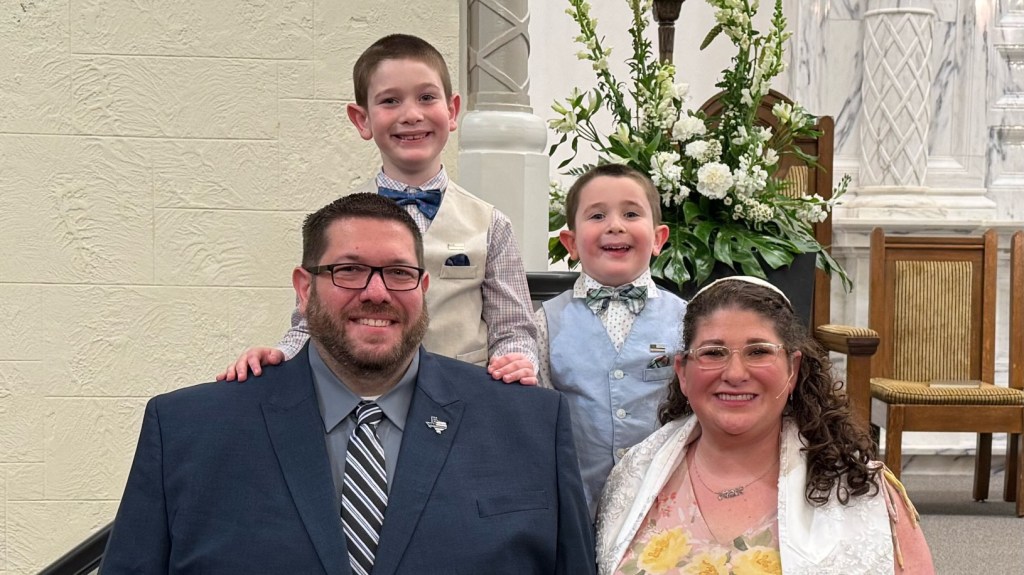
Writing A Mental Health Odyssey was about survival. Writing this follow-up is about what comes after survival — the living, the growing, the stumbling, the trying again.
I don’t want to pretend that the heaviness is gone. It isn’t. The memory of how close I came will always be part of me. But so is the fact that I’m still here. That I fought my way back. That I have Marina, my boys, my crew, my chiefs, my congregation, and Michelle in my corner. That I get to keep going.
There are days I still feel the weight. Days when the shadows lean in a little closer than I’d like. But there are also days when I laugh so hard with Trevor, Josh, and Marina that I forget the world. Days when we share quiet moments that feel like everything. Days when I walk out of a shift tired but proud of the work we did.
Those are the days I choose. Those are the days that remind me that survival wasn’t the end of my story — it was the chance to keep writing it.
So here I am. Still here. Still living. Still walking forward. Choosing, every day, to keep going.
If you or someone you know are experiencing a mental health emergency,
call or text the national suicide hotline at 988.
There is help available 24/7. You matter.

 Ventricular Escape Beats